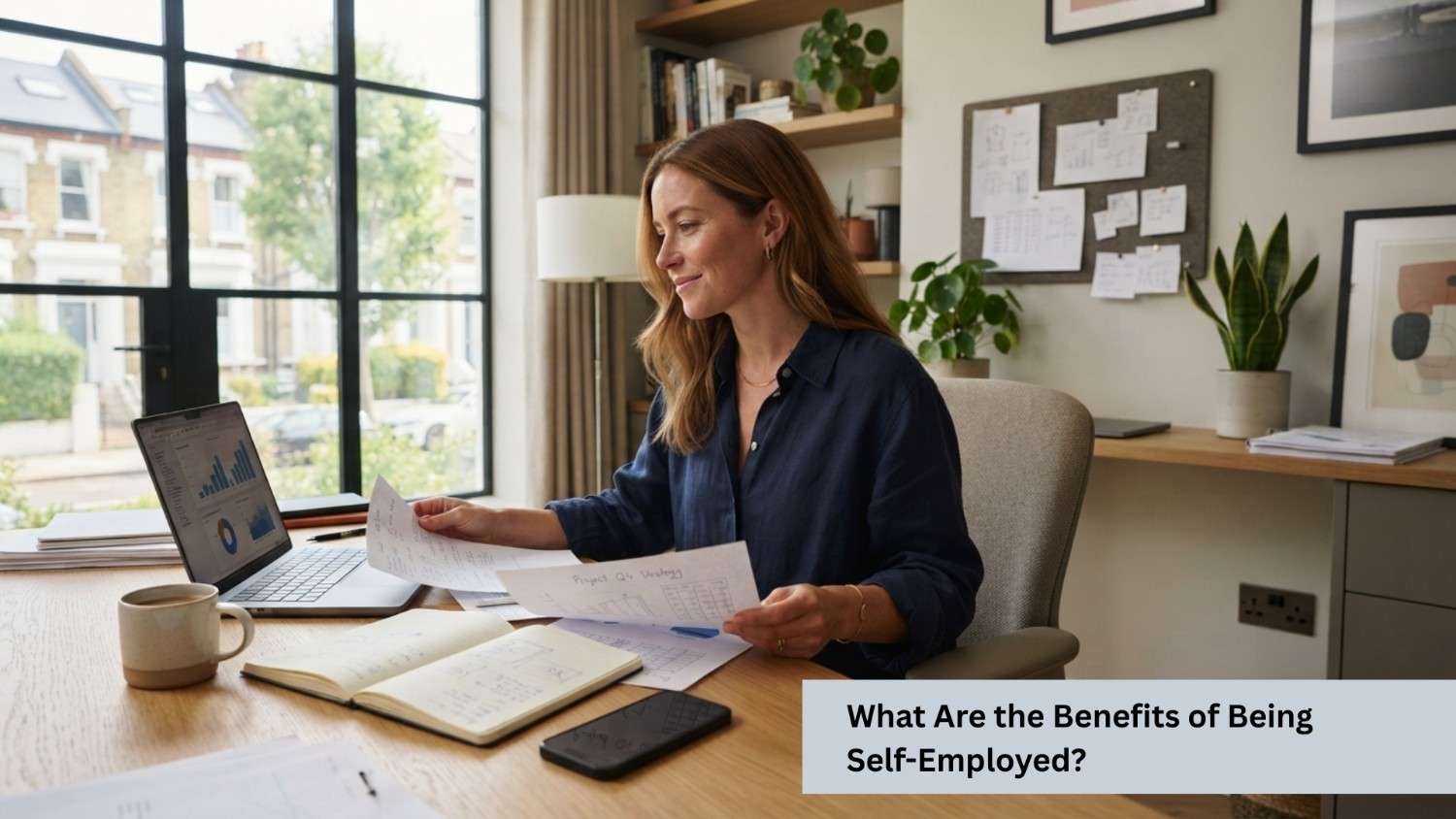
Being self-employed gives individuals greater control over their career, working style, finances, and business decisions. It offers benefits such as flexible working arrangements, the opportunity to increase earning potential, tax advantages, and the freedom to build a professional journey based on personal goals and ambitions.
Self-employment offers the freedom to shape your career, choose your clients, and work towards your own goals. Whether you're a freelancer, consultant, sole trader, or small business owner, working independently gives you greater control over your schedule, income, and future.
While it comes with added responsibility, the flexibility, independence, and opportunity for growth make self-employment an appealing choice for many professionals across the UK.
One of the greatest advantages of self-employment is the ability to build a career on your own terms. It allows you to make independent decisions, pursue opportunities that match your ambitions, and create a working life that suits your personal and professional goals.
Self-employment gives you the flexibility to decide when and where you work. This makes it easier to balance professional responsibilities with personal commitments while maintaining a healthier work-life balance.
Instead of being assigned tasks by an employer, you can choose the clients, industries, and projects that align with your skills and career aspirations. This helps make your work more rewarding and fulfilling.
Working for yourself means you have complete control over how your business operates. From setting your prices and choosing your services to deciding how you deliver your work, every decision is yours to make.
Self-employment allows you to develop a strong personal brand based on your expertise, values, and the quality of your work. A positive reputation can attract new clients, encourage repeat business, and support long-term growth.
Self-employment provides the opportunity to take greater control of your finances by creating income opportunities based on your skills, efforts, and business growth.
Self-employment allows you to influence your earnings based on your skills, experience, services, and business growth. Unlike a fixed salary, your income potential can increase as you attract more clients, expand your services, or take on higher-value projects.
Working independently allows you to explore different ways of generating income. You can offer additional services, work with multiple clients, develop new skills, or create new revenue streams to strengthen your financial position.
Self-employment encourages better financial planning and awareness. By managing your income, expenses, savings, and investments effectively, you can create a stronger foundation for long-term financial security.
Running your own business requires you to understand cash flow, budgeting, and financial decision-making. These skills help you make informed choices and manage your finances more effectively.
Self-employed professionals in the UK can access various tax benefits by claiming eligible business expenses and using effective financial planning strategies. These advantages help reduce taxable income, manage business costs efficiently, and improve overall financial management.
Self-employed individuals can reduce their taxable profits by claiming allowable business expenses. Costs such as office supplies, software subscriptions, marketing, professional fees, and business equipment may qualify if they are directly related to running the business.
If you work from home, you may be able to claim a portion of household expenses as business costs. This can include electricity, heating, internet usage, and other expenses associated with maintaining a workspace for business activities.
Certain insurance expenses related to your business, such as professional indemnity insurance and public liability insurance, may be treated as allowable expenses. Claiming these costs can help lower your taxable business profits.
Self-employed individuals can contribute to personal pension schemes to prepare for their future financial security. These contributions may provide tax advantages while helping you build a stable retirement fund.
Self-employed professionals are responsible for managing their own Income Tax and National Insurance obligations. Understanding available allowances, tax thresholds, and planning opportunities can help manage tax payments effectively.
Investing in relevant training and professional development can help improve your business skills. Certain courses, subscriptions, and learning expenses related to your existing business activities may qualify as allowable expenses.
If you use a vehicle for business purposes, you may be able to claim eligible costs such as fuel, insurance, repairs, and maintenance. Alternatively, simplified vehicle expenses may be available for qualifying business journeys.
Travel costs incurred for business purposes, including transport, accommodation, and parking expenses, may be claimed as allowable expenses. Keeping accurate records and receipts is important to support these claims.
Interest paid on business loans or finance arrangements may qualify as an allowable expense. This can help reduce the overall cost of borrowing money to support business operations or expansion.
Starting a business often involves costs such as equipment, website development, marketing, and professional services. Some of these initial expenses may qualify for tax relief if they meet HMRC’s requirements.
Being self-employed provides the opportunity to take control of your career, explore new opportunities, and build a professional path that aligns with your personal goals. The freedom to choose your projects, manage your working style, and make independent business decisions makes self-employment a rewarding choice for many professionals across the UK.
However, managing financial responsibilities such as bookkeeping, tax deadlines, cash flow management, and HMRC compliance can become challenging while focusing on business growth. Keeping accurate financial records and making informed financial decisions is essential for building a successful and sustainable self-employed career.
PHS Associates supports self-employed individuals, freelancers, and small business owners with reliable accounting solutions, including bookkeeping, Self Assessment tax returns, tax planning, and financial advice.
Our experienced team helps you stay organised, minimise financial stress, and focus on achieving your business goals. Contact PHS Associates today to get expert accounting support and take your self-employed journey forward with confidence.
Self-employed individuals may claim allowable business expenses such as office costs, software, marketing expenses, professional fees, and business travel costs.
Maintaining accurate records, managing cash flow, saving for tax payments, building consistent client relationships, and planning business growth can help improve financial stability.
The main advantages include greater flexibility, control over career decisions, increased earning potential, the ability to choose clients and projects, and potential tax benefits.

PHS Associates Acc & Co is led by a skilled team with expertise in Accounting, Taxation, Payroll, Business consultancy, and Company secretarial services.
© Copyright 2026 PHS Associates Acc & Co
Company number - 08670151