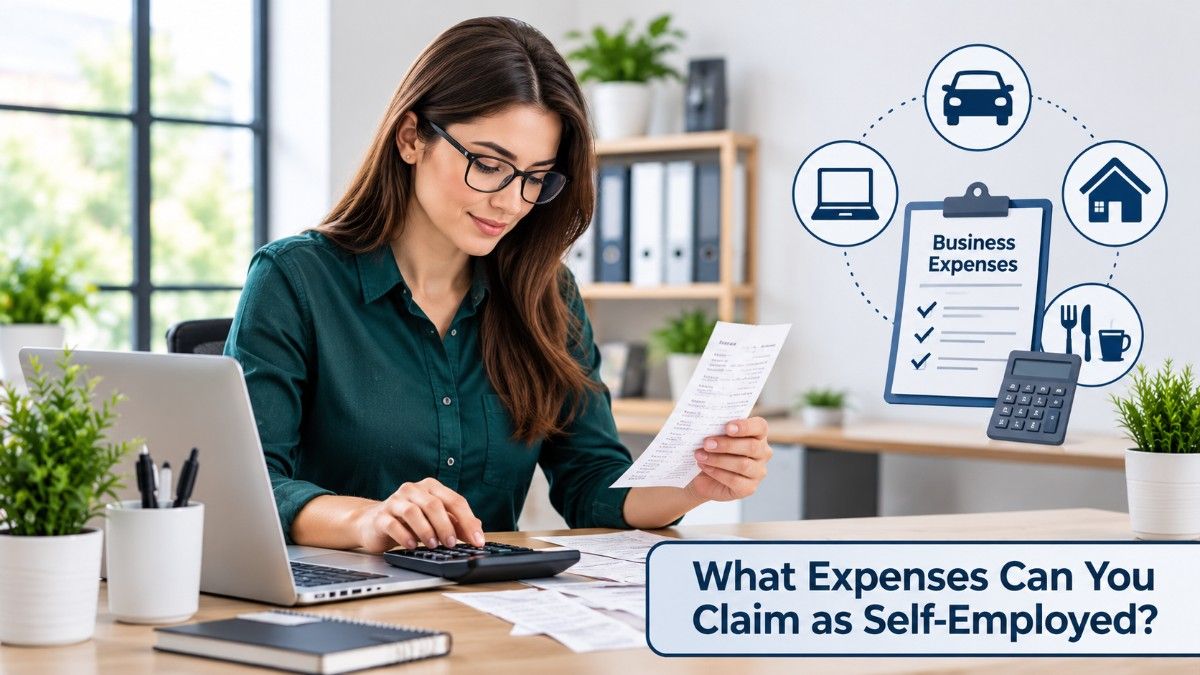
"Self-employed individuals in the UK can claim allowable business expenses to reduce their taxable profits. These include office costs, travel, professional fees, insurance, marketing, and business equipment. You can claim expenses only when they meet HMRC rules. Personal costs and certain business expenses are not fully deductible, so accurate records are essential."
Are you paying more tax than necessary because you are missing legitimate business expenses? Many self-employed professionals overlook costs that could reduce their taxable profits. Understanding which expenses you can claim helps you manage your finances. It also makes preparing your Self Assessment tax return much easier.
HMRC allows eligible business costs to be deducted when calculating taxable profits. However, each expense must meet the relevant rules. Knowing what qualifies can help you avoid mistakes and unnecessary tax payments.
This blog explains the main expenses you can claim as self-employed. It also covers record-keeping, tax relief, and HMRC requirements.
An allowable expense is a business cost you can deduct when calculating taxable profits. HMRC generally allows expenses incurred wholly and exclusively for business purposes. Personal spending does not qualify, even when it happens alongside business activities.
For example, if your annual business income is £40,000 and allowable expenses total £8,000, your taxable profit is £32,000. You generally pay Income Tax on your taxable profits, subject to applicable allowances and rules.
You can find the official guidance in HMRC's business expenses guidance.
Understanding the self-employed allowable expenses list UK business owners can use helps identify legitimate deductions. The following categories cover common costs, although eligibility depends on your circumstances.
You can claim certain office expenses, including stationery, printing, postage, and business phone calls. If you work from home, you may also claim an appropriate share of household running costs.
Eligible costs may include:
You must separate personal and business use where expenses serve both purposes. Alternatively, eligible sole traders may use HMRC's simplified expenses rates for working from home.
Business travel can qualify when it relates to your self-employed work. Examples include travelling to clients, attending business meetings, and visiting temporary workplaces.
You may claim:
Ordinary journeys between home and a permanent workplace are generally not allowable. You cannot claim private holidays, personal journeys, or unrelated travel costs.
For further details, read HMRC's guidance on simplified expenses.
Equipment costs may qualify as business expenses or through capital allowances. The correct treatment depends on the item, your accounting method, and applicable tax rules.
Common examples include:
If you use equipment personally as well, only the allowable business proportion generally qualifies. Check the applicable rules before claiming expensive equipment or long-term assets.
Professional services can help you operate your business and meet legal obligations. Certain costs are deductible when they relate directly to your trade.
Examples include:
Personal legal fees and costs associated with acquiring certain assets may receive different tax treatment. Check whether a specific payment qualifies before including it in your return.
If you employ staff, eligible wages, employer pension contributions, and certain employment costs may qualify. Subcontractor payments can also be allowable when they relate to your business activities.
Training expenses may qualify when they maintain or improve skills used in your existing business. Courses that prepare you for an entirely new trade may not qualify.
Other potentially allowable costs include:
The self employed allowable expenses you claim must meet the relevant HMRC conditions. Always retain supporting invoices, receipts, and other evidence.
Not every payment made while running your business qualifies for tax relief. Common examples of non-allowable costs include:
Always separate personal spending from genuine business expenses. This helps you submit an accurate return and respond confidently to HMRC enquiries.
Allowable expenses reduce your taxable business profits rather than directly reducing your tax bill. You calculate your profit by deducting eligible expenses from your business income.
Consider this example:
|
Business calculation |
Amount |
|
Annual business income |
£40,000 |
|
Allowable expenses |
£8,000 |
|
Taxable business profit |
£32,000 |
In this example, you calculate Income Tax on £32,000 of business profit, alongside any other relevant income and applicable allowances.
Your actual tax liability depends on your circumstances and the relevant tax rates. Claiming £8,000 in expenses does not mean receiving an £8,000 tax refund.
You may calculate certain costs using actual expenditure or HMRC's simplified expense rates. Simplified expenses are available for eligible vehicle costs, working from home, and living at business premises.
Compare both methods before choosing the most appropriate approach. You must follow the applicable rules and keep supporting records.
Read HMRC's simplified expenses guidance for details.
Besides routine business costs, you may qualify for other tax allowances. The correct option depends on your income and business circumstances.
Eligible individuals can use the £1,000 trading allowance against qualifying gross trading income. However, you generally cannot claim this allowance alongside actual business expenses for the same income.
Compare the allowance against your expected expenses before deciding. Review HMRC's trading allowance guidance to understand the restrictions.
You can still claim eligible business expenses when paying through your personal bank account. Keep the receipt and clearly record the business purpose.
For example, buying £120 of business supplies personally does not automatically prevent a claim. The purchase must qualify under HMRC rules and be recorded accurately.
Accurate records help you identify allowable expenses and complete your Self Assessment tax return. Good bookkeeping also makes it easier to review business profitability.
Follow these practical steps:
You do not normally submit receipts with your tax return. However, HMRC may request evidence, so keep your records accurate and accessible.
See HMRC's guidance on business records for more information.
HMRC considers the actual working arrangement rather than relying solely on your job title. Factors include control over your work, financial risk, and responsibility for delivering services.
You may be self-employed if you operate as a sole trader or partner. However, working for one client does not automatically establish self-employment status.
If your employment status is unclear, use the official HMRC employment status checker.
Correctly identifying your status helps determine which tax rules apply. It also helps you understand your reporting obligations and eligible business deductions.
Understanding allowable expenses helps self-employed professionals reduce taxable profits and manage business finances. Keep accurate records and follow HMRC guidance to claim confidently.
Managing expenses and preparing tax returns can become challenging as your business grows. PHS Associates supports self-employed individuals, freelancers, contractors, and small businesses across the UK.
Our team can help organise financial records, identify potentially allowable expenses, and prepare Self Assessment tax returns. We also help you understand deadlines and maintain accurate bookkeeping throughout the tax year.
Want help managing your business expenses and tax return? Book a free consultation to discuss your accounting needs.
Yes, you may claim eligible household costs relating to business use. You can calculate the business proportion of actual costs or use HMRC's simplified expenses rates if eligible.
You can generally claim the business-related proportion of phone and internet costs. If a contract is used personally and professionally, exclude the private portion.
Ordinary everyday meals are generally not allowable business expenses. Certain meals may qualify when incurred during qualifying business travel, subject to HMRC rules.
You should keep receipts, invoices, bank statements, and other supporting records wherever possible. HMRC may ask you to demonstrate that expenses are genuine and business-related.
Allowable expenses generally reduce your taxable business profits, which can lower your Income Tax liability. The actual saving depends on your income, tax allowances, and applicable rates.

PHS Associates Acc & Co is led by a skilled team with expertise in Accounting, Taxation, Payroll, Business consultancy, and Company secretarial services.
© Copyright 2026 PHS Associates Acc & Co
Company number - 08670151