Planning to submit your Self Assessment tax return but do not have a Unique Taxpayer Reference (UTR)? Without this important 10-digit number, getting your tax affairs in order can become confusing, especially if you have recently become self-employed or started working as a sole trader. The good news is that obtaining a UTR is straightforward when you understand the registration process and know which details HMRC requires.
If you need to apply for a UTR number, you generally need to register for a Self Assessment with HM Revenue and Customs (HMRC). Once your registration is processed, HMRC issues your UTR so you can identify yourself when dealing with your tax obligations.
This blog explains how to apply for a UTR number online, whether you can register by post, who needs one and what to do if you lose your existing reference.
A Unique Taxpayer Reference (UTR) is a 10-digit number issued by HMRC to identify taxpayers within the UK tax system. It helps HMRC match your tax records, Self Assessment returns and related correspondence to the correct person or business.
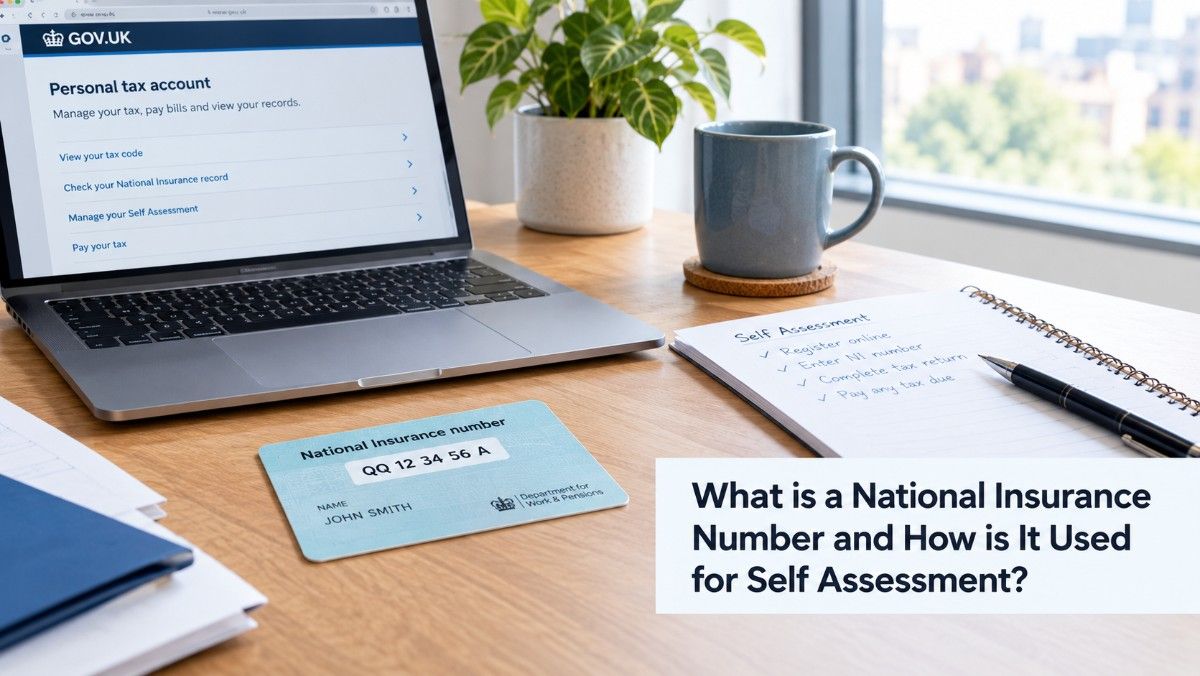
Your UTR is different from your National Insurance number and Government Gateway user ID. Each serves a separate purpose.
For example, if you start working as a self-employed graphic designer, you may need to register for Self Assessment. HMRC will issue a UTR after processing your registration, which you can use when submitting your tax return.
Remember: You normally keep the same UTR throughout your tax affairs. You do not need to apply for a new one every tax year.
The simplest way to obtain a UTR is usually to register for Self Assessment through the official GOV.UK website.
Follow these steps:
1. Check whether you need to register: If you are self-employed, have untaxed income or meet another Self Assessment requirement, check the relevant HMRC rules.
2. Visit GOV.UK: Search for “register for Self Assessment” on the official government website and select the option that matches your circumstances.
3. Choose the correct registration route: Sole traders, partners and people registering for other reasons may need different routes or forms.
4. Provide your personal details: Enter the information requested, which may include your name, address, date of birth and National Insurance number.
5. Submit your registration: Review your details carefully before completing the process.
6. Wait for HMRC to issue your UTR: HMRC will process your application and provide instructions for accessing your tax reference.
If you are registering as self-employed for the first time, you may need to set up or use a Government Gateway account as part of the process.
When you apply for a UTR number online, use the official GOV.UK website rather than third-party websites claiming to issue UTRs directly. HMRC issues the number, and you should keep it secure once received.
Yes, postal registration may be available depending on your circumstances. However, the appropriate form and process can vary according to whether you are registering as self-employed, joining a partnership or registering for another Self Assessment reason.
Applying for a UTR number by post may take longer than online registration, but it can be an alternative if you cannot use HMRC’s online services. The process depends on your circumstances, so make sure you use the correct form and follow the latest HMRC instructions.
1. Choose the appropriate form: Check HMRC’s guidance to identify the correct form for your situation. SA1 may be relevant for individuals registering for Self Assessment, while SA400 is used to register a partnership.
2. Complete the application: Enter the requested personal, contact and business details accurately.
3. Review all the information: Check your answers carefully before sending the form, as errors or missing details may delay processing.
4. Include supporting documents if required: Provide any additional information or documents specifically requested by HMRC.
5. Post the completed form: Use the postal address provided in HMRC’s official instructions. Consider using a tracked postal service and keep your proof of postage.
6. Wait for HMRC’s response: Processing and delivery times can vary. HMRC will provide your UTR once your registration has been processed.
7. Helpful tip: Keep a photocopy of your completed application and any supporting documents. If you have not received a response within the expected timeframe, contact HMRC to check the progress of your registration rather than submitting a duplicate application.
Not everyone in the UK needs a UTR. You will generally need one if you must register for Self Assessment or already have relevant HMRC tax obligations.
Common examples include:
Self-employed individuals: Sole traders who need to report taxable business profits through Self Assessment.
Business partners: Individuals who need to submit a personal tax return as a partner.
Landlords: People whose rental income means they must report it through Self Assessment.
Company directors: Directors who have a personal Self Assessment filing obligation, depending on their circumstances.
Individuals with other untaxed income: People who meet HMRC's criteria for reporting income outside the usual PAYE system.
Example: Sarah leaves her full-time job to become a freelance marketing consultant. She earns income directly from clients and meets the criteria for Self Assessment. She registers with HMRC and receives a UTR to help her manage her tax reporting obligations.
Having a UTR does not automatically mean you must file a tax return every year in every circumstance. Your filing obligations depend on your situation and HMRC's requirements.
Before starting your registration, prepare the information HMRC requests. Having the relevant details available can make the process easier and reduce the risk of errors.
You may need:
The exact information depends on your circumstances and the registration route you use.
Check every detail before submitting your application. Incorrect personal information or an unsuitable registration route may delay processing.
If you are required to submit a Self Assessment tax return and do not already have a UTR, you will generally need to register and obtain one. The UTR helps HMRC identify your tax records and associate your return with the correct taxpayer.
However, you should not wait until the filing deadline approaches to begin registration.
For example, if you become self-employed during a tax year, check when you need to register and make sure you allow time to complete the process. Your registration deadline and tax return deadline are separate requirements.
A UTR is also not the same as a Government Gateway user ID. Your Government Gateway details help you access online services, while your UTR identifies your tax records.
If you already have a UTR, you generally use the same number for subsequent Self Assessment returns rather than registering again.
You should register as soon as you establish that you need to file a Self Assessment tax return, following the applicable HMRC deadlines.
For someone who becomes self-employed, the registration deadline is generally 5 October following the end of the tax year in which they started trading, where the standard Self Assessment registration rules apply.
For example, if you start trading during the 2026/27 tax year, which runs from 6 April 2026 to 5 April 2027, the standard registration deadline would be 5 October 2027.
Do not confuse this registration deadline with the usual online Self Assessment filing and payment deadline of 31 January following the end of the tax year.
Registering early gives you more time to receive your UTR, organise your records and prepare your tax return. If your circumstances are unusual, check the relevant HMRC guidance to confirm which deadline applies.
If you have already registered but cannot remember your UTR, you usually do not need to apply for another one. Instead, look for your existing reference.
Try the following options:
Keep your UTR in a secure place so you can find it when needed. Avoid sharing it unnecessarily, as it is an important identifier associated with your tax affairs.
Obtaining a UTR number is essential if you need to manage your UK tax obligations through Self Assessment. Registering with HMRC early, understanding the eligibility requirements and keeping track of important deadlines can help you avoid unnecessary delays. If you lose your UTR, you can usually recover your existing reference without applying for a new one.
PHS Associates provides reliable accounting and tax support to individuals, self-employed professionals and businesses across the UK. Our team can help you understand registration requirements, organise financial records, prepare Self Assessment tax returns and manage HMRC deadlines efficiently.
Whether you are registering for the first time or need ongoing tax assistance, our experienced team is here to help. Book Free Consultation today to discuss your requirements and discover how our professional accounting services can make managing your tax responsibilities simpler and more convenient.

PHS Associates Acc & Co is led by a skilled team with expertise in Accounting, Taxation, Payroll, Business consultancy, and Company secretarial services.
© Copyright 2026 PHS Associates Acc & Co
Company number - 08670151